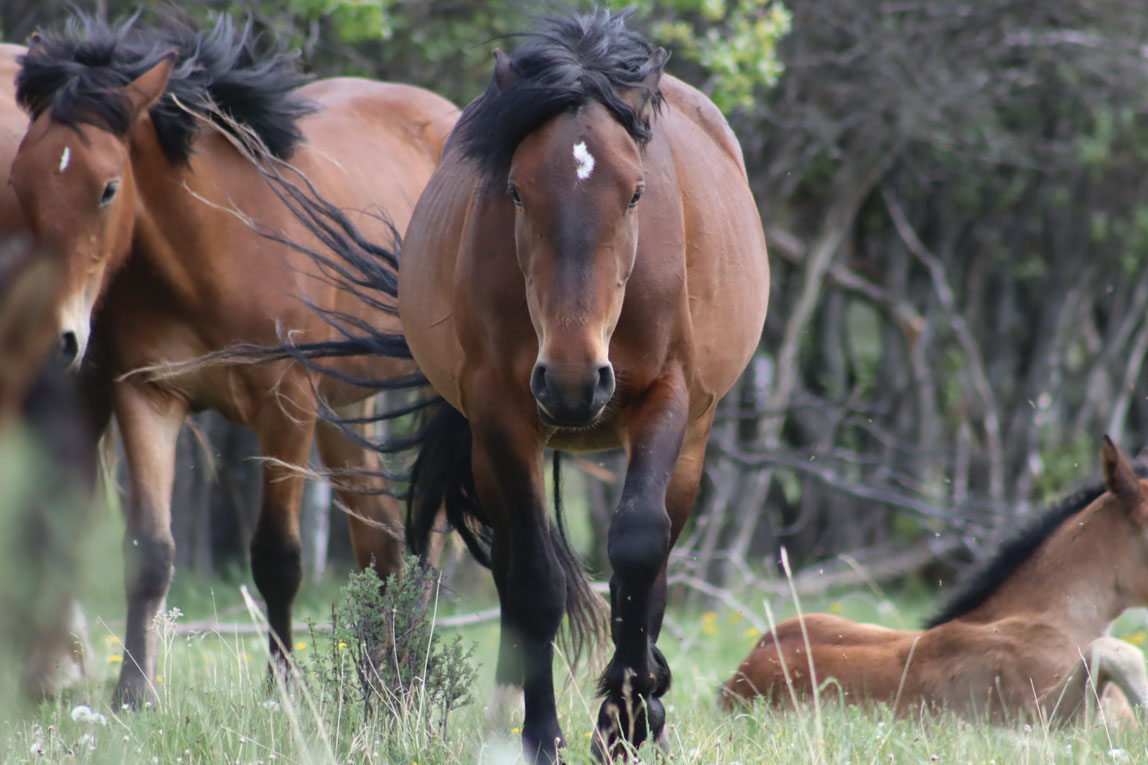
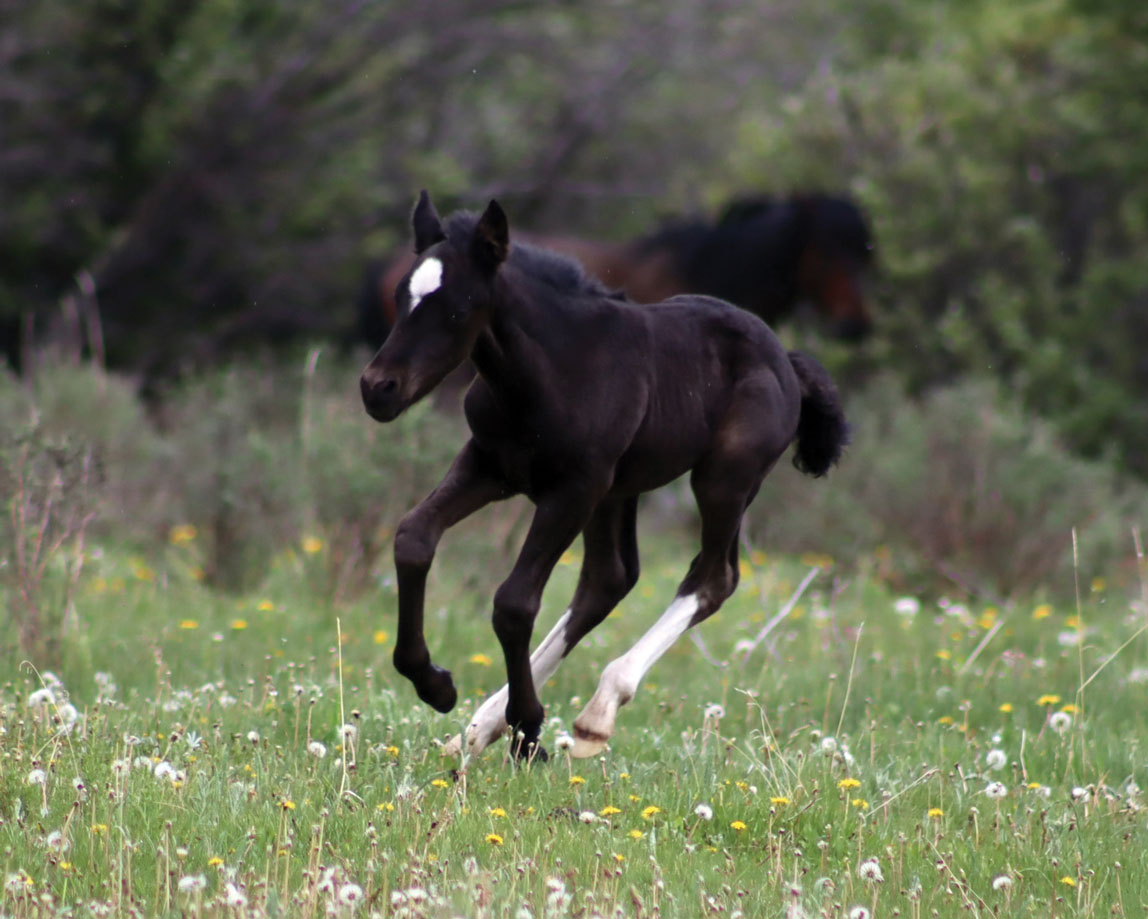
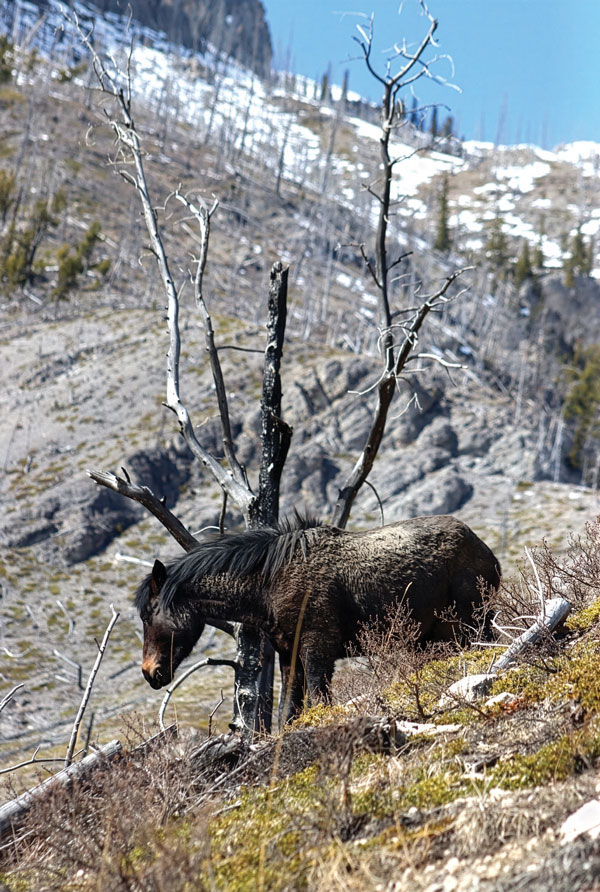
In a cold Alberta spring morning a wild colt takes its first steps up the face of a mountain. For generations, horses have roamed free here. They do so under the hungry gaze of grizzlies, wolves and cougars. Each newborn learns to trim their own hooves on the edge of rocks and to forage for grass. There is no warm barn, no bedding, no humans to protect them. Yet they survive. Roughly 1,500 horses roam millions of acres across the Eastern Slopes of the Rockies.
One local rancher with a passion for wild horses, Darrell Glover, estimates that only 8 per cent of colts survive their first year. Now they face growing threats from humans too. The province’s 2023 Feral Horse Management Framework calls for adoption, contraception and a limited cull. This, the government says, will protect rangelands by limiting the number of horses grazing native fescue grasses and contributing to erosion. But advocates such as Glover argue that impacts from oil and gas, forestry, ranching and recreational off-highway vehicles (OHVs) are the bigger threats to rangeland.
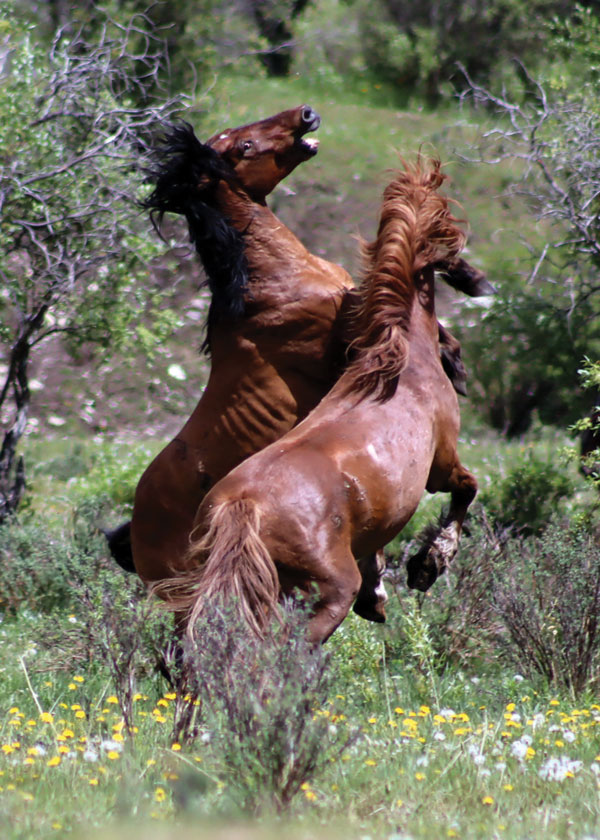
The horses’ very existence in Alberta is controversial. Tensions boiled over in 2025 in the foothills near Sundre, home to Alberta’s largest wild horse herds. Ranchers demanded that wild stallions be removed from Crown leases designated for grazing cattle. Outfitters argued the horses were destroying wildlife habitat. Wild-horse advocates countered that the Sundre zone is open to OHVs, which scar and destroy rangeland, with riders sometimes chasing and killing wildlife. They argued the horses themselves are often targeted, and called for stiffer anti-poaching measures.
Roughly 1,500 horses roam millions of acres across the Eastern Slopes of the Rockies.
The widening conflict invites the question: Who decides whether wild horses get to remain on the Eastern Slopes? The horses have been here for hundreds of years, the descendants of domestic animals once used by First Nations, farmers, ranchers, hunters and the logging and mining industries. But the federal government doesn’t recognize them as a native species, so they fall under provincial jurisdiction. Under Alberta’s Stray Animals Act the horses are legally considered feral livestock. The province wants to shrink their population. “If 90 mares are darted with contraception, Alberta will lose 500 wild horses over the next five years,” says Glover.
At his ranch near Olds, Glover conducts citizen-science research and advocacy. In 2015 he founded the Help Alberta Wildies Society (HAWS). From 2018 to 2025 he chartered helicopters to follow the government’s survey paths, documenting a 10 per cent wild-horse population decline. He challenges the province’s contention that the population is growing, and believes a cull is unnecessary. He wants wild horses to be recognized as a naturalized species—a non-native organism that establishes a self-sustaining population in a new environment, without human help and without creating undue harms. This designation is distinct from invasive species such as zebra mussels.
The Canadian Species at Risk Act allows for protection of a naturalized species if it has been here for more than 50 years. Currently the Sable Island herd off the coast of Nova Scotia are the only wild horses classified as naturalized. Four other distinct wild horse populations remain in Canada, including those near Sundre.
On December 1, 2025, Banff-Kananaskis MLA Sarah Elmeligi presented a petition with over 15,000 signatures to the Alberta legislature. It asked the government to recognize feral horses as a naturalized species and to put a moratorium on their capture and removal until an independent management council is created.
Jenalene Antony is a writer, photographer and filmmaker who got her professional start as a reporter at the Yorkton News Review.
____________________________________________
Update from CBC: RCMP Investigating Shooting of Baby Horse in Kananaskis