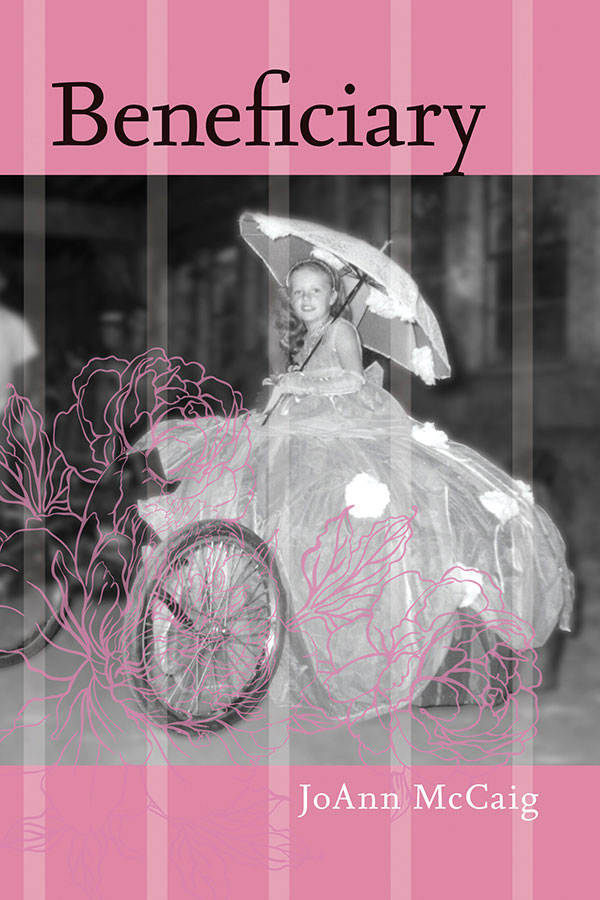
Beneficiary
by JoAnne McCaig
University of Calgary Press
2026/$28.99/216 PP.
Can being rich ever be morally neutral? Or morally good? These questions are at the heart of JoAnn McCaig’s new novel, Beneficiary, in which the main character, Seren, navigates the transition from deadbeat to wealthy heiress.
The beginning of the book is set in a hedonistic 1970s West Coast, full of crappy apartments, bad situations and worse boyfriends. From there, a raucous ride takes us through conflict and mess to the 1990s, where a picture of what Seren was running from begins to emerge: a Calgary upper-class life of suburban country clubs, starched collars and “good” schools—what she describes as “a leash of pearls.”
Seren—one letter short of serene—battles with her privilege for the entire novel. Her marriage to a working-class Irishman is ultimately about class divides. He, poor. She, rich. Then catastrophe complicates it further.
Mid-life (and mid-book) Seren receives a life-changing inheritance. It is then that memories of a wealthy upbringing amid Calgary’s Mount Royal mansions spark the conflicts of a wealthy life. The portrayal of her internal moral battles over goodness and wealth are at times a bit heavy handed, but the tension is compelling.
Seren does all sorts of things with her wealth—hand-wringing over what she would leave her children to empower them but not enable them, starting non-profits, and, in a bit of a surprising turn, going overseas to volunteer in the Greek refugee crisis after having a spent a week at a luxury resort in the Alps. Friends absolve her: “Use it for good,” they say. But Seren is tormented by complicated questions. What does it mean to have so much more than other people—in your community, your city, your country, the world? In Greece, what does it mean when it gets too heavy and you can escape with ease?
McCaig skewers upper class society for its dullness, homogeneity and conservatism. But what alternative does McCaig see for Seren? She’s not so naive as to imply that Seren can volunteer her way out of privilege.
Recently we’ve seen a rise in “eat the rich” themes in shows such as White Lotus or movies like Parasite. It is fascinating to explore these increasingly pressing ideas from a Canadian perspective, and from a story that is relatable in many ways (particularly for Albertans—the Peters’ Drive-In reference will have you dreaming of the patty-and-a-half order). Seren’s life doesn’t really answer any of the questions raised, but she does make peace with them in a satisfying close. The questions, of course, remain: What makes a good life? What allows for a good life—or for a life to do good?
Megan Clark is a writer and librarian from Lethbridge.
_______________________________________