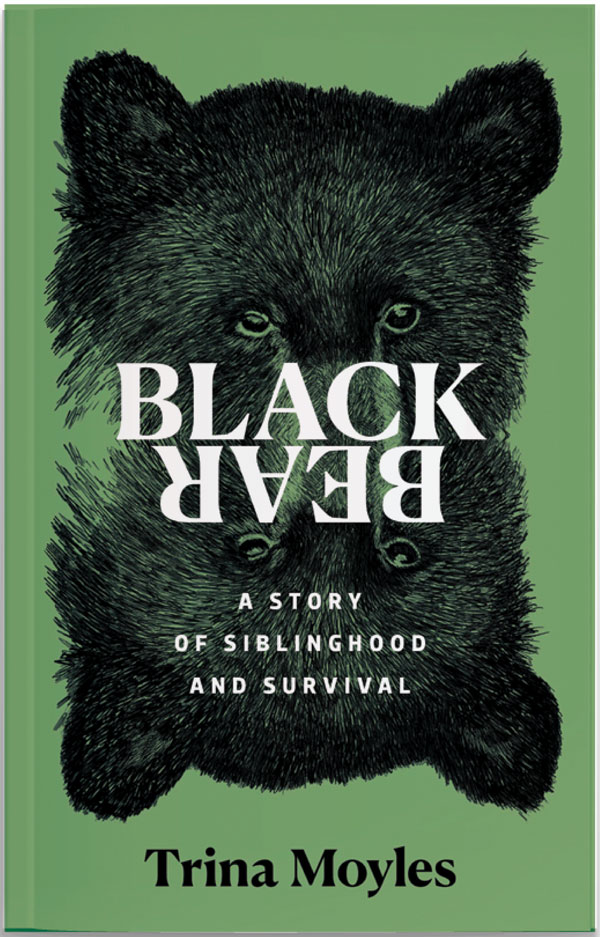
by Trina Moyles
KNOPF CANADA
2026/$36.00/328 PP.
Dear reader, first I have to tell you this is a biased book review. I met Trina Moyles in a non-fiction workshop for our Master of Fine Arts degrees, where she wrote a piece that discussed the stupidity of pheasant hunting. As someone who self-identifies as a pheasant hunter, I took great affront to this insult to both my heritage and my life calling. So, to counter her making fun of my life’s passions almost a decade ago (but I hold a grudge), I will tell you all about why you shouldn’t read her latest memoir, Black Bear.
When Trina was 5, her wildlife biologist father brought home an orphaned black bear cub before sending it south to the Calgary Zoo. This sparked her lifelong fascination with bears. When young, she also revered her older brother. But as they grew up, and he went to work in the oil patch and partied, this relationship grew difficult. If you like books that soft-pedal a delicately balanced conversation about addiction and the toll it can take on family relationships and dynamics, as well as how we can perhaps better understand those going through struggles, then don’t read this. Trina says she wasn’t sure who she understood less, her brother or the bear. Her writing about these relationships is provocative, yet tuned to moments of joy, and as the book unfolds you can see how thin is the line we all walk between heartbreak and love.
Don’t read this book if you like stories that seek to bridge the urban and rural divides of life in Alberta. Trina counters her upbringing in Peace River and the facets of life in a resource-extraction-driven town with her young adult years in Edmonton. But there’s not a lot of overlap. As someone who spent his formative years trying to be funny in Drayton Valley and then significantly less funny in Edmonton, I was brought back to the way the transition to the city can be jarring for those who know a very different style of life than an urban existence. To the book’s benefit, Trina doesn’t sugarcoat rural life but instead tells it like it is, allowing the reader to gather their own information about imposed machismo, the inherent fear and expected roles that women are often placed in, and the rampant abuse of booze and drugs that exists. But with all of that, Trina also shows the reader the beauty and complexity of the boreal forest and the characters, both human and bear, that inhabit it.
Throughout the book there’s a constant sense of impending climate catastrophe, whether that’s loss of wildlife, habitat, the changing weather systems, fires, human–wildlife conflict. Trina weaves her observations and research on these subjects into the personal narrative in a way that’s accessible yet articulate. She includes scientific terms but doesn’t twist the story to push an agenda. So, if you want a book that is thought-provoking and hard to put down, then I guess this might be your thing.
Trina is well known for her previous memoir, Lookout, about her experiences working in a fire tower in northern Alberta, scanning the forest through a spotting scope while also navigating challenges in her love life. Black Bear expands on that immersive experience but in a different way. Trina forms a relationship with a mother black bear and her cubs at the lookout tower. As I read about the similarities of that relationship to the one with her brother, I thought of my own past and the connections I probably misread. Maybe I misread that initial encounter with Trina and she didn’t actually make fun of pheasant hunting (she did). But maybe I was wrong about holding a grudge and you should definitely read Black Bear.
Conor Kerr is a Métis/Ukrainian author in Edmonton. His novel Prairie Edge was shortlisted for the 2024 Giller Prize.
_______________________________________