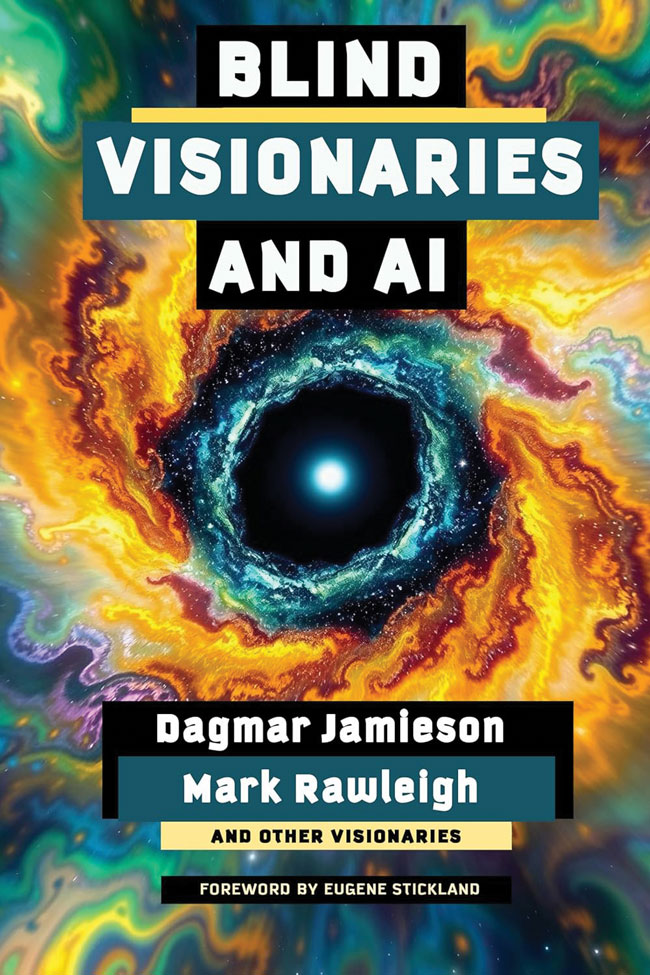
by Dagmar Jamieson and Mark Rawleigh, Durvile & UpRoute Books, 2025
This work explores how blind and visually impaired people use artificial intelligence (AI) in their lives. Through essays from editors Dagmar Jamieson and Mark Rawleigh, four other contributors, and interviews conducted by Jamieson, we learn about smart glasses that can read documents and identify colours, GPS-enabled white canes, search engines that work better with screen readers, and how AI was used to edit sections of the book and design the cover. J.R. Rizzo’s essay on his experience testing and creating new technologies is notable. Generative AI “can be both practical and liberating,” he writes, but “incorrect information can be devastating if the user relies on it.” AI provides greater accessibility, but whether it can do so in an affordable, ethical and safe manner remains to be seen.
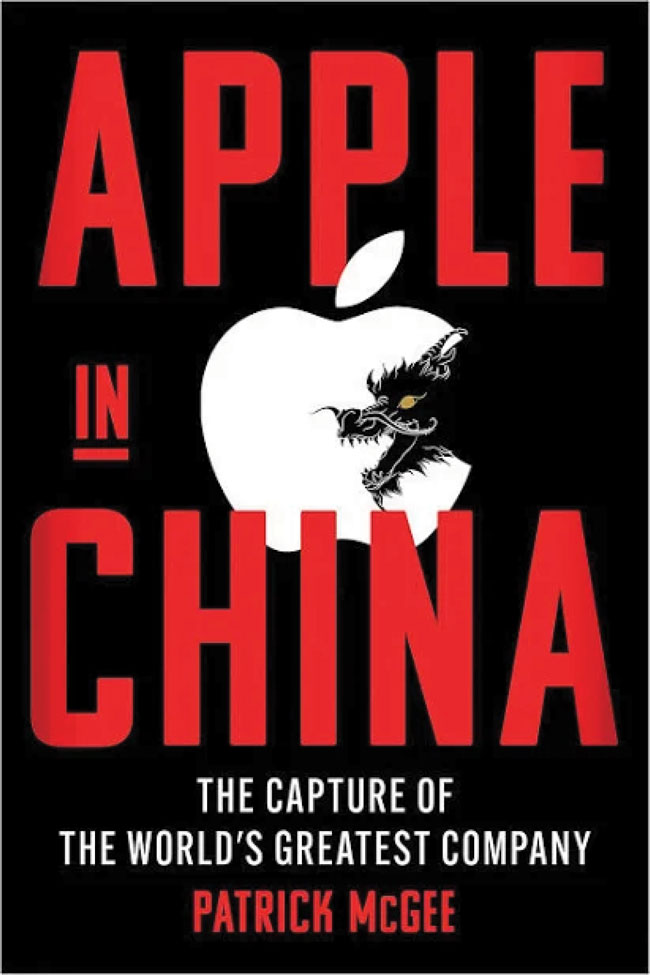
Apple in China: The Capture of the World’s Greatest Company by Patrick McGee, Scribner, 2025
From the early 2000s, “Apple used China as a base from which to become the world’s most valuable company,” writes journalist Patrick McGee, but “after years of Apple seemingly calling the shots, with Chinese provincial governments and suppliers bending over backward to win orders, the power dynamics have shifted.” McGee, who grew up in Calgary and is now a correspondent for The Financial Times, reveals shocking stats in this highly readable book. By 2015, for instance, Apple was investing $55-billion per year in China. It has paid off—in 2024 the company made $94-billion in net profit—but it has also come with a cost. As McGee shows, while helping China become the world’s leading manufacturer, Apple “bound its future inextricably to a ruthless authoritarian state.” “Beijing has allowed Apple to exploit its workers, so that China can in turn exploit Apple.”
_______________________________________