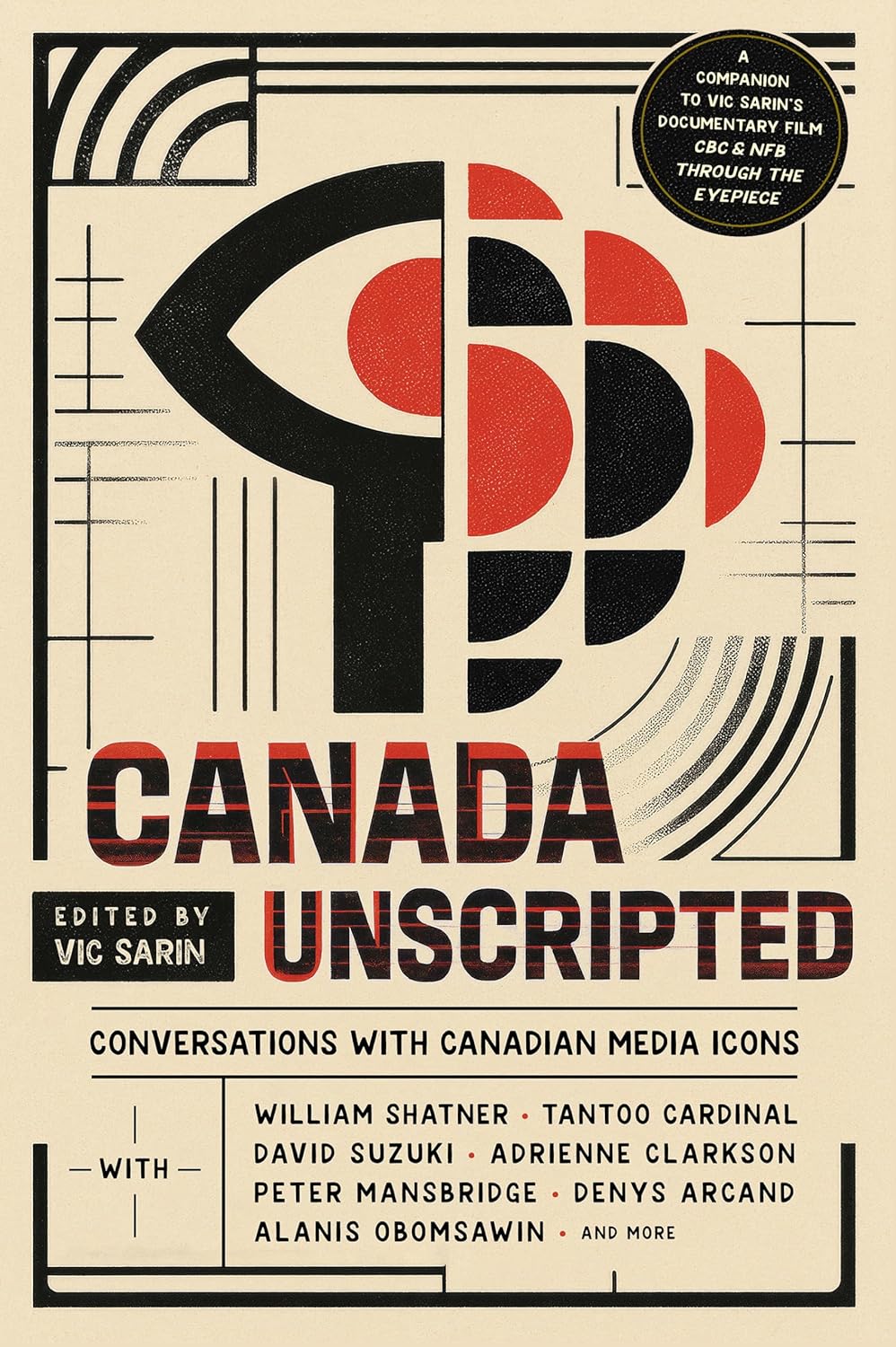
Edited by Vic Sarin
DURVILE & UPROUTE BOOKS
2025/$35.00/320 PP.
When Donald Trump sucker-punched Canada last winter, the immediate national response was to hit back. By spring, the weapon of choice was an elbow, a rhetorical device that helped propel the Liberals to an election win. Canadians boycotted American products, booed the “Star-Spangled Banner,” and booked vacations anywhere but stateside. Capital investors continued to spend into the US market and the government proved flexible in its trade bargaining strategy, willing to give up retaliatory tariffs, the digital services tax—opposed by Democrats and Republicans alike—and more, as it calculated that Canada’s sovereignty and well-being required that we put a little water in our Niagara wine. Such is politics.
Culture and the arts took a backseat to trade, defence and infrastructure projects in discussions about the country’s future. We might think of cultural production as infrastructure, but that’s not what the government means when it refers to major projects, and it’s likely not what it’s thinking about when it talks of facilitating interprovincial trade. In Canada Unscripted: Conversations with Canadian Media Icons, filmmaker Vic Sarin collects 21 interviews with writers, actors, producers, presenters and others who make the case that cultural institutions are national infrastructure, an essential component in nation-building, and nation-keeping.
Sarin’s interviews meander, touching on biographical detail, the old war stories of media luminaries, and introspective forays into the nature, place and function of our core institutions, particularly the Canadian Broadcasting Corporation and the National Film Board. That William Shatner got a career start at CBC and Denis Arcand at the NFB—each of whom feature in the book—is remarkable, though they represent a common theme: if not for the CBC and the NFB, many of the figures who’ve managed national and international fame and acclaim might never have escaped local orbit. Their career trajectories began on a launch pad, one that was built by the state and for Canadians.
Mark Starowicz, a producer and journalist who made Canada: A People’s History, tells Sarin that the Broadcasting Act was a reaction to American dominance of radio airwaves across the border, which induced the government to nationalize the spectrum. He calls broadcasting a declaration of national sovereignty: “We will become a parliament of the air.” Interviews with others, including David Suzuki, Adrienne Clarkson, Kristin Kreuk, Bob McDonald, Peter Mansbridge, Tantoo Cardinal and George Stroumboulopoulos, reinforce the necessity of national cultural institutions to tell Canadian stories and to tell global stories to Canadians.
The book isn’t a paean to provincialism. Interviewees consistently reiterate that the CBC, NFB and other national cultural institutions aren’t meant to replace private alternatives from home or abroad, but to provide a Canadian option for those who want one, particularly in cases where the private market wouldn’t otherwise sustain creative undertakings. As producer Louise Lore argues, public broadcasting helps create a national identity, a fact in tension with, though not contrary to, the role that public arts and culture funding plays in sustaining and growing subnational identities.
Efforts to protect cultural sovereignty and tell Canadian stories face contemporary challenges, but old barriers remain. Money has been an issue for a long time. There’s never enough, at least not in the right places at the right times. Interference from government or from management, barriers to cultural production in Canada, are always a risk. The internet, social media and streaming are newer shoals to navigate, though the threat of foreign—particularly US—dominance of Canadian attention spans isn’t new in the least.
The encouraging news, however, is that we understand the nature of these challenges. Perhaps the most heartening reality is that our history, so much of it told in Canada Unscripted, offers us a plan for meeting and overcoming these challenges, if we’re willing to listen.
David Moscrop is a political scientist and the author of Too Dumb for Democracy? (Goose Lane Editions).
_______________________________________