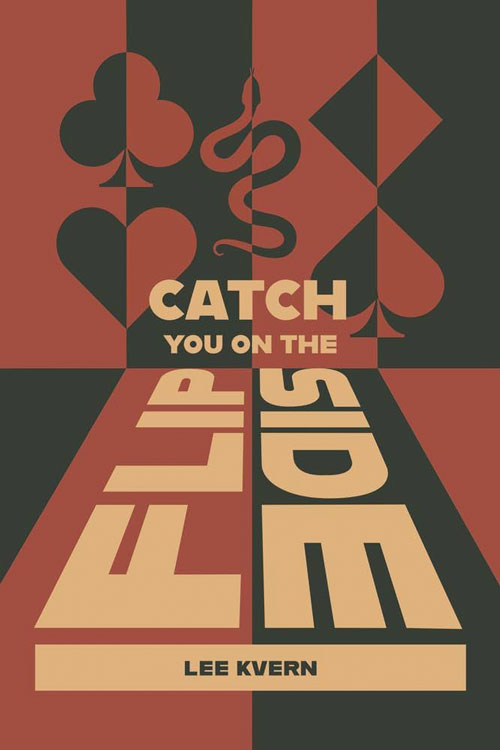
by Lee Kvern
ENFIELD & WIZENTY
2025/$27.95/252 pp.
At first glimpse the plot of this fast-moving novel seems to lack promise: 1980s casinos, the last days of the Ferdinand Marcos regime, a creepy stalker called Regrettable Russell. Not my cup of chai, per se. But Lee Kvern’s perspective-shifting potboiler, with its punchy chapter titles and unexpected weavings of past and present, Manila and Calgary, assassinations and card counting, proves engaging.
The thriller begins with a sadly typical scene: the careless brutality of a murdered woman’s burial, fortunately rendered atypical via its “narration” by a grizzly bear. The book whips with caffeinated pace between 1983 Philippines, where a pig farmer is framed as the purported killer of a prominent politico, and a 1984 Cowtown casino, where one of the slaying’s witnesses, Amado, is hiding out. The novel also showcases other complex characters. These include Elle (whose daughter, feminist studies barista Jeliane, is featured in the 2017 coffee shop chapters, their fate linked by the above-noted slimeball), Moose, Erik the Dutch, Billy Jacked and The Crier. Catch You on the Flipside deftly tosses the problems of duplicity from hand to hand like a scalding potato.
The text does, however, struggle with editorial concerns. Along with typos, they include syntactical and spacing issues and odd constructions of verbs, such as a column that reaches “from the vaulted ceiling down” to the carpet, and many instances of adjectives presented incorrectly: “blue pale shirt” or “black slick hair” (the order is always qualifiers first, then colour) along with sloppy repetitions of nouns, such as she “cupped Aquino’s earnest face in her hands and kissed his smiling, laughing face.”
But Kvern’s style at its best is as taut and peppy as that found in Raymond Chandler’s detective fiction with a splash of Haruki Murakami’s deadpan delivery, especially in her depiction of characters such as journalist Ken Kashiwahara: “there were things you could not capture in a photograph… you had to be there to feel it deep in your breastbone. The guard’s bamboo flute seared Ken’s grief.” Or Lina, Rolando’s justice-questing wife: “Lina held Rolando’s pillow to her chest, his pig farmer scent embedded within [and] tried not to cry in the black morning.”
By the close of this fast-paced rollick in espionage, shoes, paid weepers, misogyny, java and blackjack, a range of shocking flipsides has been exposed, some of them even lovely ones. Most vitally, criminals are slithered towards their inevitable ends, the novel concluding with a snake’s own flipside, in a potent symbol of how nurturance can twist into murder.
Catherine Owen is the author of Moving to Delilah (2024).
_______________________________________
Read More from Enfield & Wizenty