Lisa Sygutek was the vice-president of the Alberta Weekly Newspaper Association when she jumped onto what would turn out to be a fateful video call in early January 2022. On that call she met two lawyers from Sotos Class Actions, a law firm out of Toronto with a track record of taking on big corporations, even governments, and winning cases in the billions of dollars. David Sterns and Adil Abdulla were hoping Sygutek and her colleagues at the AWNA would spread the word to their membership of roughly 80 newspapers throughout Alberta and the Northwest Territories about a new case they were trying to put together—a lawsuit against Google and Meta.
The law firm had been monitoring a growing number of reports published by government agencies in Europe, the UK and Australia that accused the two giant technology companies of using their market power to take advantage of publishers and advertisers. A key development for the Toronto lawyers and the case they were trying to build in Canada came in the fall of 2021 when a New York judge unsealed most of the documents in an antitrust lawsuit against Google that had been filed by Ken Paxton, the attorney general of Texas, along with several more attorneys general from other states. The Competition Bureau of Canada started its own investigation into Google’s online advertising business in October 2021, around the same time the documents in the Texas-led case became public.
The Sotos lawyers figured they had the evidence they needed to prove Google misled publishers about how its online ad technology worked in order to reap additional profits and corner the market for digital display advertising. But the firm couldn’t find a Canadian publisher willing to stand up to the tech behemoths. No plaintiff meant no case. By the time they reached out to the AWNA they had been looking for the better part of a year.
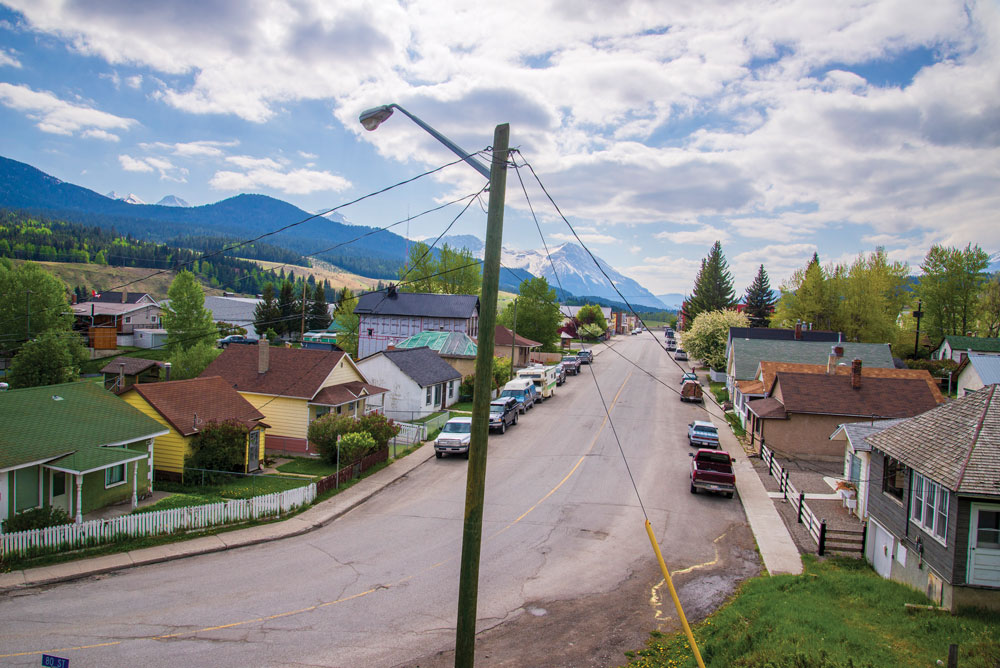
Minutes after hearing the lawyers’ description of the allegations against Google and Meta, Sygutek interjected. She was in. She owns a weekly newspaper in the Crowsnest Pass, a municipality of 6,000 denizens of five towns huddled along a two-lane highway as it cuts through the front ranges of the Rocky Mountains in southwestern Alberta. As she learned about the inner workings of Google’s online ad technologies, something clicked for Sygutek. The lawsuit validated the anger and confusion she had felt in recent years as she had watched a huge chunk of her advertising revenue evaporate. Her staff had been cut in half, from eight to a skeleton crew of four.
That split-second decision to volunteer was as much a reflex as it was a conscious choice. The paper has always meant more to Sygutek than just a business. It’s a way of life, one passed down by her parents. The Crowsnest Pass Herald is a local institution, having been founded in 1930. It’s the second-oldest business in the community behind Morency Plumbing & Heating, which got started in 1909. Those sorts of things matter in the Pass. Roots matter. Maybe it’s a defence mechanism against the relentless wind.
And so that’s how the owner of the Pass Herald, circulation 2,000, would end up representing Canadian publishers in an $8-billion class action lawsuit against two of the largest corporations in human history.
Sygutek has a tattoo on the inside of her left wrist. Three Canada geese, each about the size of a dime, fly in a triangle up towards the palm of her hand. She lost her father, Willy Sygutek, then her mother, Gail, and then her mentor and business partner, Trevor “Buddy” Slapak, within a two-and-half-year stretch from the summer of 2014 to the start of 2017.
Buddy and Sygutek had worked together at the paper up until a month before he died. He was 86. “He loved the paper, and so part of my keeping the paper, it’s a legacy thing,” she told me. “I felt like it was my job to carry on for him because he was one of the most influential people in my life. He was really something.” Buddy was the editor of the Pass Herald, but had a variety of other part-time jobs, from mortician to autobody technician. He raced stock cars, flew gliders and played the saxophone in local bands and orchestras.
More than one person I talked to described Sygutek as a “pistol.” Her word would be “spicy.” She’s 52 without a trace of grey in her blond hair, and she’s quick to laugh and even quicker to give her opinion. She has summitted 40 peaks in the Crowsnest Pass area, many of them by herself. “It’s a really great time for me to reflect and kind of fall back in with nature, and that brings me a tremendous amount of joy,” she said. Sygutek was coming down off Mount Gladstone, a 20-kilometre route that gains 1,000 metres of elevation, this past summer when she was startled by what she thought was a bear and fell off a short drop, breaking her ankle. She wrapped it with duct tape and just kept going.
When Sygutek was really young—3 or 4—she would sit under her mother Gail’s desk in her office in Blairmore and play with a Fisher-Price phone. She’d pick up the plastic receiver and answer, “Good morning, Pass Herald.” Gail started working at the paper in 1962. She bought it from Buddy in 1977, but he stayed on as editor. “I literally grew up in that building underneath my mom’s desk,” Sygutek said.
She started helping her father deliver the paper at age 6 or 7. He’d drive and she’d hop out at each stop to run the new issue up to the door. She helped stuff flyers during high school for pocket money. Sygutek studied English at the University of Lethbridge and then got another degree in management. She was going to move to Calgary and take the corporate world by storm. But the offices of the Pass Herald, in the company of her mother and mentor, offered such a great atmosphere to raise her three sons—another generation growing up under the desks of a bustling small-town paper.

This past October Sygutek closed her office of 17 years in a storefront on the main street in Blairmore. It was three doors down from the one her parents used to occupy. Much of the foot traffic through the door, the people who would stop by to pick up their newspaper in person and chat, had been widowers adjusting to a new phase of solitary life. The extra $15,000 a year she’ll save on rent will go towards another part-time reporter.
There have been some lean years over the past decade, when Sygutek didn’t take a paycheque at all from the Herald. Her gross revenue in 2014 was $350,000. It was $197,000 in 2023. That’s a 45 per cent drop when adjusted for inflation. She works part-time as a town councillor and as a public relations consultant. Her husband, Lyle Douglas, is a maintenance superintendent with Teck Resources, a company that operates one of the coal mines just over the boundary in BC.
Two nuggets of wisdom from Buddy, a quintessential small-town newspaperman, have stuck with Sygutek. One, you’re not doing your job if you don’t get sued once in a while. Real journalism is found in the kind of hard-won information that somebody doesn’t want you to know. And two, an old adage known as “Greener’s Law”: never pick a fight with a woman who buys her ink by the barrel. Buddy modified the saying as a way to encourage Sygutek to stand her ground in a male-dominated industry. “He always made a point of saying, ‘Remember, you’re playing in a field that wasn’t made for women, so you have to be stronger and tougher than everybody,’” she said.
And that constitutes a very abbreviated history of one Canadian newspaper, and newspaper family, that’s managed to keep the lights on when so many others just like it have blinked out of existence.
Of the 525 local news outlets that have closed in Canada since 2008, 400 were community newspapers, defined as publishing less than five times a week. April Lindgren, a professor at Toronto Metropolitan University’s School of Journalism, has her finger on the weakening pulse of the country’s media industry. She is the lead investigator on the Local News Research Project, which includes a crowd-sourced map that tracks all the changes to print, broadcast and digital media organizations across Canada. “There are real consequences that are no longer the subject for academic journal articles. They’re actually playing out on the ground in communities,” Lindgren said. Some of those repercussions include lower voter turnout, an increase in social and political division, the spread of misinformation, and less accountability for people in positions of authority in both the private and the public sectors.
The news, and especially the news in the form of a local paper, offers a chronicle of the people, organizations and institutions that characterize a community. Margaret Sullivan wrote about this place-making dimension of newspapers in her book Ghosting the News, published by Columbia Global Reports in 2020: “It’s not just watchdog journalism that matters. It’s the way a local columnist can express a community’s frustration or triumph, the way the local music critic can review a concert, the deeply reported feature stories, the assessment of a new restaurant, the obituaries, the letters to the editor. The newspaper ties a region together, helps it make sense of itself, fosters a sense of community, serves as a village square.”
Of the 525 local news outlets that have closed in Canada since 2008, 400 were community newspapers.
Sullivan started her career at the Buffalo News, a daily that at its peak in the 1990s was making a million dollars a week for Berkshire Hathaway, Warren Buffett’s holding company. She recounts the major plot points of the internet’s disruption of the newspaper industry in her book. It’s a story most of us are familiar with. Craigslist, which started as an email newsletter in the mid-1990s, first drained away lucrative classified advertising. Then Google and Facebook siphoned more ad revenue from traditional media, due to the scale of their audiences as well as their ability to narrowly target ads and then track whether or not they succeeded at convincing someone to buy something. “This ubiquity, along with narrow targeting, was a tough combination to compete against,” Sullivan writes.
The 2008 financial crisis and resulting recession was another blow to subscription and advertising revenues. Sullivan references a widely circulated graphic by the Newspaper Association of America that captured the speed and magnitude of the industry’s decline. “From its peak in 2000 to 2012, print advertising fell 71 per cent,” she writes. Data provided by News Media Canada, an advocacy organization that represents 500 digital and print titles across the country, shows a 79 per cent drop in ad revenue for newspapers from 2010 to 2022.
Sullivan explains the downward spiral of the media industry in terms of the familiar trope of how a new and disruptive technology supplants an older, less effective one. It’s the same kind of story about the inevitable march of progress as that of the horse and buggy getting usurped by the automobile. But the growing number of reports and lawsuits by regulators around the world, as well as private cases like the one brought by Sygutek and Sotos, have revealed a potential plot twist to what had been considered a straightforward narrative about innovation and obsolescence.
Google made close to $238-billion from advertising in 2023. The bulk of that revenue, about $175-billion, was generated from their search engine. This past August, a US federal judge ruled that Google maintains an illegal monopoly in online search and search text advertising—the ads that pop up to match the results of a search. The next step in the legal process is to figure out how to restore competition to that market. One of the remedies proposed by the US Justice Department is for Google to sell off its Chrome web browser.
The Justice Department faced the tech company in court again in September 2024, this time over an alleged monopoly in online advertising technologies. Google made about $31-billion from this side of their business in 2023. Digital display advertising is the lifeblood of online publishers. These types of ads help fund much of the content we read and consume on the internet. Every time someone visits a website, in the moments it takes to load, a multi-step and automated process unfolds for selling ad spaces that will reach the particular user viewing the page. These one-time ad placements are called “impressions” and millions are sold every day. Publishers use digital tools to help them get the best price for each impression. Advertisers use various programs to help them buy the highest-value impressions at the lowest possible prices. Ad exchanges are another type of program that work as intermediaries, taking the bid requests from the publisher side of the auction and matching them with bid responses from advertisers.
Google owns the dominant digital tools, the programs with the largest share of the market, at all three stages of the online auction for digital display ads. Lawyers with the Justice Department argued in court this past fall that Google violated antitrust laws in the realm of digital display ads, harming both publishers and advertisers in the process. The trial concluded at the end of November and the judge, as of April 1, 2025, had not yet delivered her ruling.
“It’s hard to imagine anyone at Google thinking all of this would be legal.”
The Competition Bureau of Canada announced in late 2024 that it too plans to take legal action against Google for anti-competitive practices in online ad tech services. Matthew Boswell, the commissioner of competition, is quoted in a press release about the Bureau’s rationale: “…Google has abused its dominant position in online advertising in Canada by engaging in conduct that locks market participants into using its own ad tech tools, excluding competitors and distorting the competitive process.”
Ken Paxton, the attorney general of Texas, used plainer language to describe his state’s lawsuit in a video posted to social media in late 2020. “If the free market were a baseball game, Google positioned itself as the pitcher, batter and the umpire,” he said. The trial for that litigation started in March 2025. “Right now when you visit the website of a news outlet you know and trust, like the Wall Street Journal or your favorite local paper, you’ll see advertisements likely placed there by Google, but Google doesn’t tell you, the public, that they manipulate the advertising auction and continually illegally profit by taking money away from those web pages and putting it in their own pockets,” Paxton said in the video.
The class action lawsuit involving Sygutek and the Pass Herald was filed in March of 2022 and takes a similar approach as the case by Paxton and several other US attorneys general. One part of the case by Sotos alleges that Google told publishers that their tools for selling ad space on websites would maximize their revenues when in fact they were suppressing them. The firm’s statement of claim describes how several algorithms and programs operate behind the scenes to the benefit of Google and the detriment of publishers. “It’s hard to imagine anyone at Google thinking all of this would be legal,” said Adil Abdulla, a lawyer with Sotos.
The other part of the lawsuit accuses Google and Facebook of colluding to undermine an alternative technology called “header bidding” that enables publishers to sidestep some of Google’s tools and thereby earn more money. The tech companies nicknamed their secret agreement “Jedi Blue.”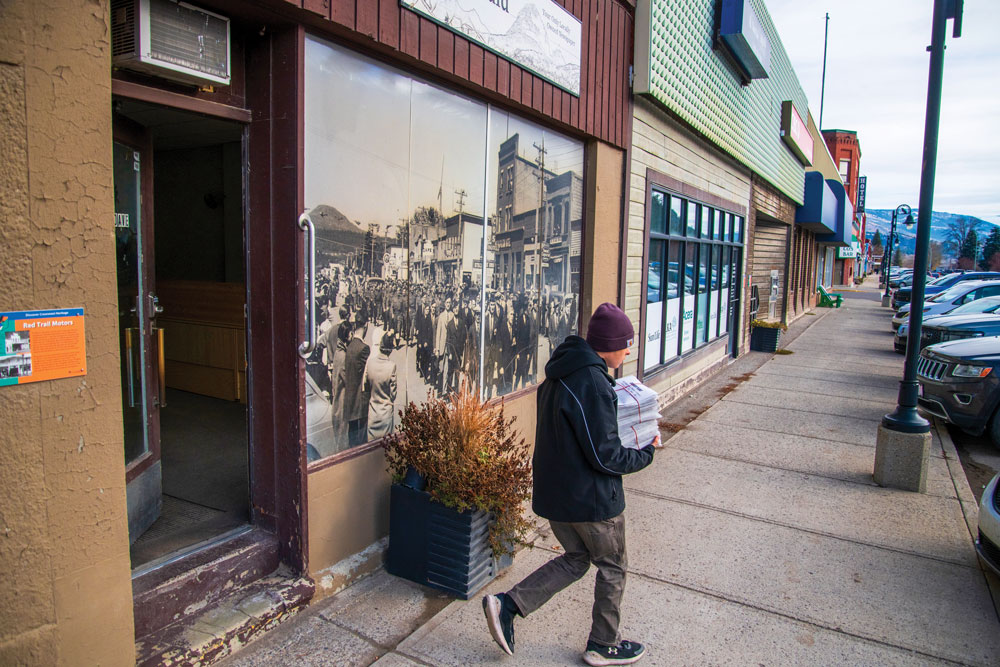
The US-based companies tried to get the class action in Canada dismissed, and filed motions to strike in March of 2024. This past October, chief federal justice Paul Crampton ruled that the case against Google could proceed but that Sotos had not provided enough detail to justify the allegations of collusion. Abdulla told me they planned to appeal that decision and expected to have a hearing by the end of 2025.
The length of the trial will depend on how many motions the defendants bring. Sotos Class Actions recently concluded a case that had lasted 17 years. But then again, Google and Meta could decide to settle at any moment and abruptly end the lawsuit. The damages would be split evenly between the two parts of the claim: $4-billion in compensation for Canadian publishers because of the alleged conspiracy, and another $4-billion to account for lost revenue because Google allegedly misrepresented how its ad technologies worked. The law firm consulted with economists and other experts to determine the sum for the damages. Abdulla explained that the court will decide at a later stage of the trial who belongs to the class of defendants and how the potential damages will be divided among them.
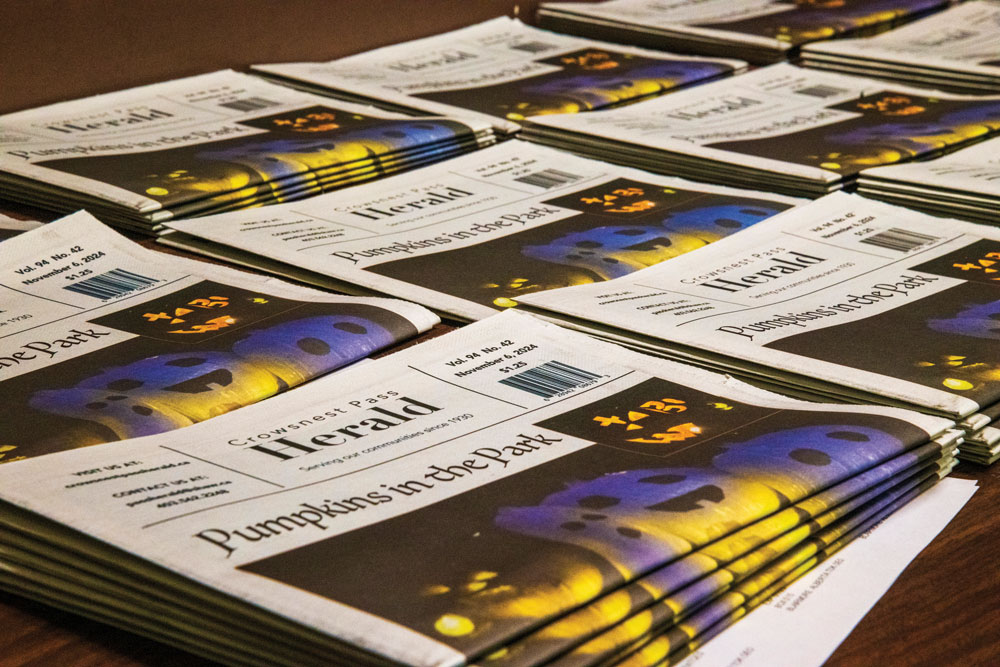
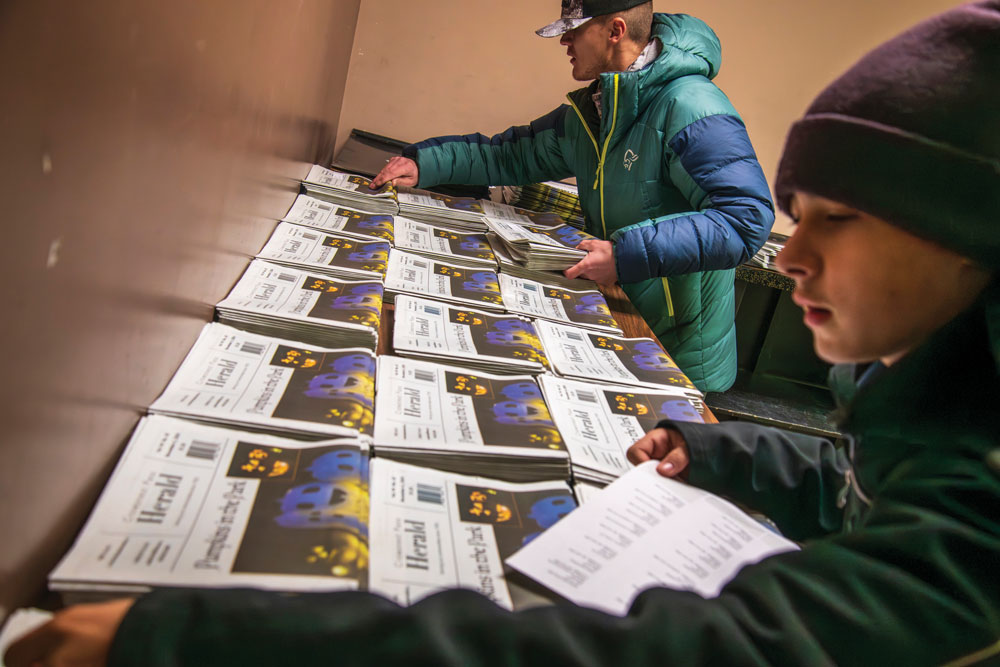
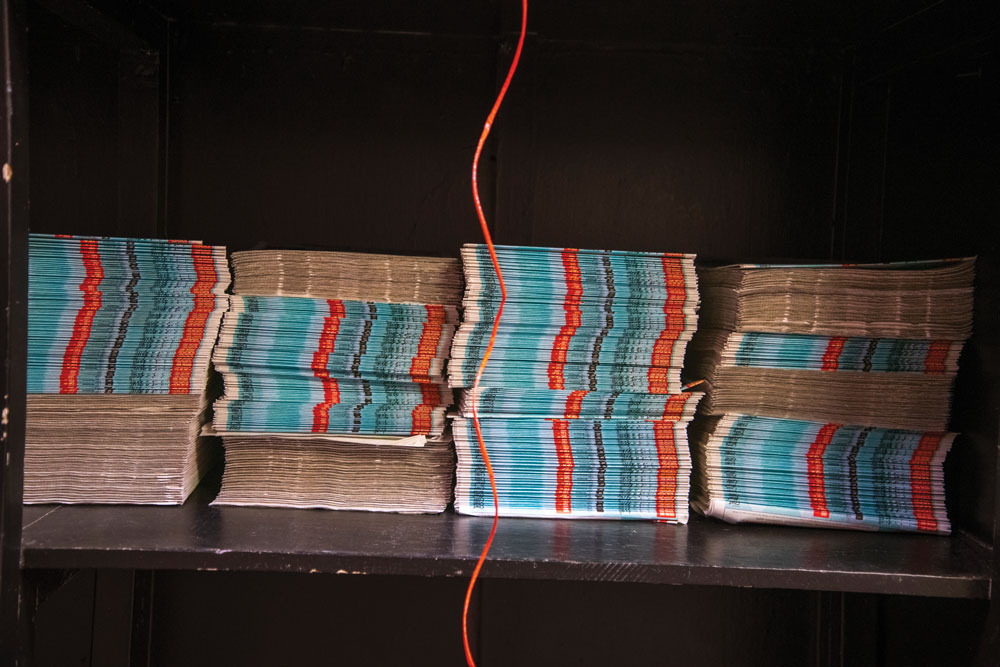
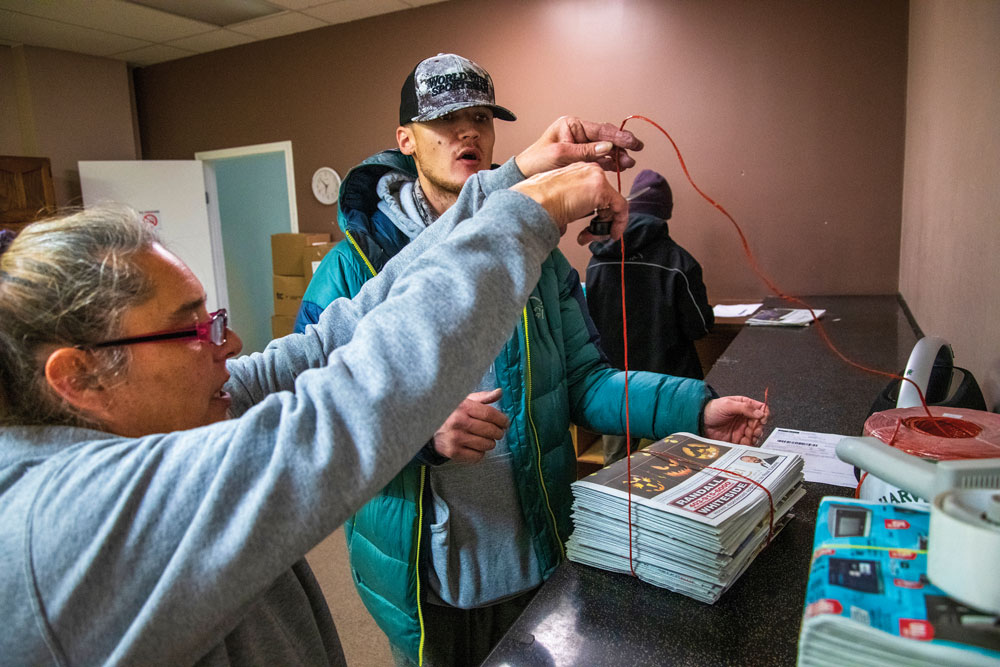
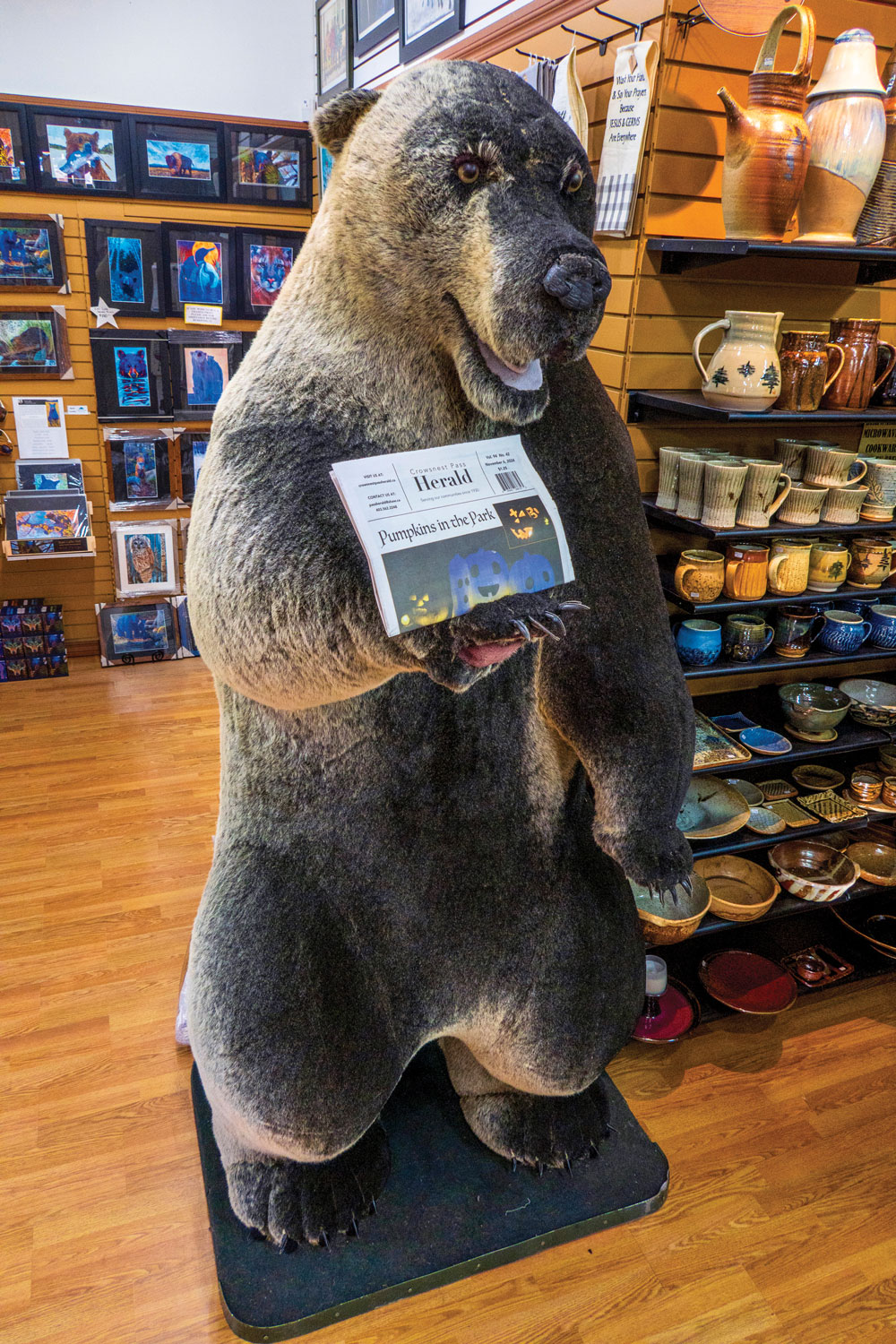
The November 6 edition of the Pass Herald was printed in Lethbridge and shipped out that same morning. It arrived at about 10 a.m. to the old office on Blairmore’s main street across from the railway tracks. Sygutek had moved out during the first week of October, but was still renting the back room for the weekly ritual of preparing the new issue for delivery. The front-page headline of vol. 94, no. 42 read: “Pumpkins in the Park,” and was complemented by a series of nighttime photos of jack-o’-lanterns from an event in Coleman the week before.
“Just get them in, do them straight and count 10,” Mary told me. It was her job to stuff the flyers, which that week were from Canadian Tire. She’s been doing it every Wednesday morning for 20 years. Her sister Shirley usually helps, but she’s in her mid-80s now and was dealing with some health issues. Mary changed the orientation of the paper every 10 copies so it was easier to count the number in a stack. She went to a sink in the corner every so often to wash the ink off her hands.
Two young men and their supervisor from McMan, a social agency that provides supports for people with diverse abilities, were labelling papers on another table against a wall in the windowless room. Sygutek had printed the names and addresses back at her new home office.
I asked the group what the big stories were in the Pass these days.
“The coal mine. We want the mine,” Mary said.
“This is a coal town,” said the woman from McMan.
I had noticed a few posters in the windows of homes and businesses with a similar message. Coal has a long history in the area, although the last mine closed in 1983. Many locals are proud of the industry. The region has retained a hardscrabble, working-class feel. The old miners cottages, tiny bungalows built up close to the roads, are still a defining feature of the five small communities. But the modest homes are increasingly being replaced by larger and fancier residences. People looking for mountain vacation properties are driving up housing prices.
She tries to cover both sides and encourages her reporter to follow his instincts.
Town council had voted earlier that fall to hold a non-binding referendum at the end of November to gauge the desire in the community for a new mine on nearby Grassy Mountain. Northback Holdings, the company that wants to operate the mine, is from Australia. That week’s paper included a couple of stories about the coal project and the referendum, including one that outlined the concerns of a conservation society about how the mine will impact local water quality and the environment.
Sygutek is the fourth generation of her family to live in the Pass and is a vocal supporter of the new mine. But she tries to cover both sides of any topic in the paper and encourages her reporter, Nicholas Allen, to follow his journalistic instincts. She gets frustrated when people complain that she’s too biased in her editorials, though. “That’s my one part in the newspaper where I’m supposed to give my opinion on politics, government—whatever the hell I feel like,” she said.
On a tour of the rest of the office space, Sygutek pointed out where Buddy and her mom used to have offices. Two large wooden desks still filled the front room by the entrance. She told me how she was diagnosed with cancer three months after she first met the lawyers from Sotos and agreed to take part in the lawsuit. She needed emergency surgery on May 31, 2022, the day before her 50th birthday, but was back at work at the Pass Herald within a week. She had to wear an abdominal binder to stabilize her core and protect the incision. “It was a bizarre time,” she said. “But that’s what you do, right? The paper doesn’t stop. Nothing should stop the newspaper. So I just kept going.”
Doug Horner is the author of Back From the Deep (Steerforth Press, 2024). He is a former staffer at AV and lives in Calgary.
Guillaume Nolet is a photographer who documents society, culture and rural life. You can find more of his work here.
____________________________________________
Read more from the archive “Publishing Through a Cultural Revolution” January 2023.