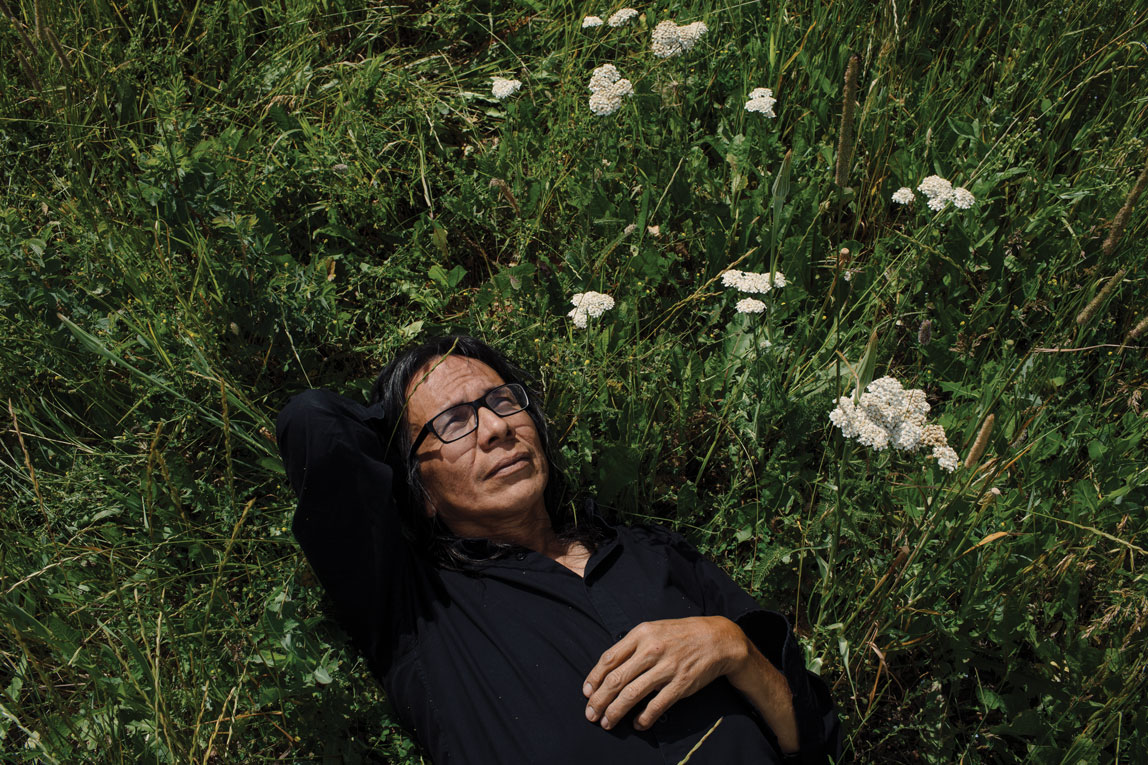
Singer near some aohtoksooki, or common yarrow.

Singer and his dog Zorro beside raised beds where he is growing native plants to preserve seeds and eventually fight back leafy spurge.
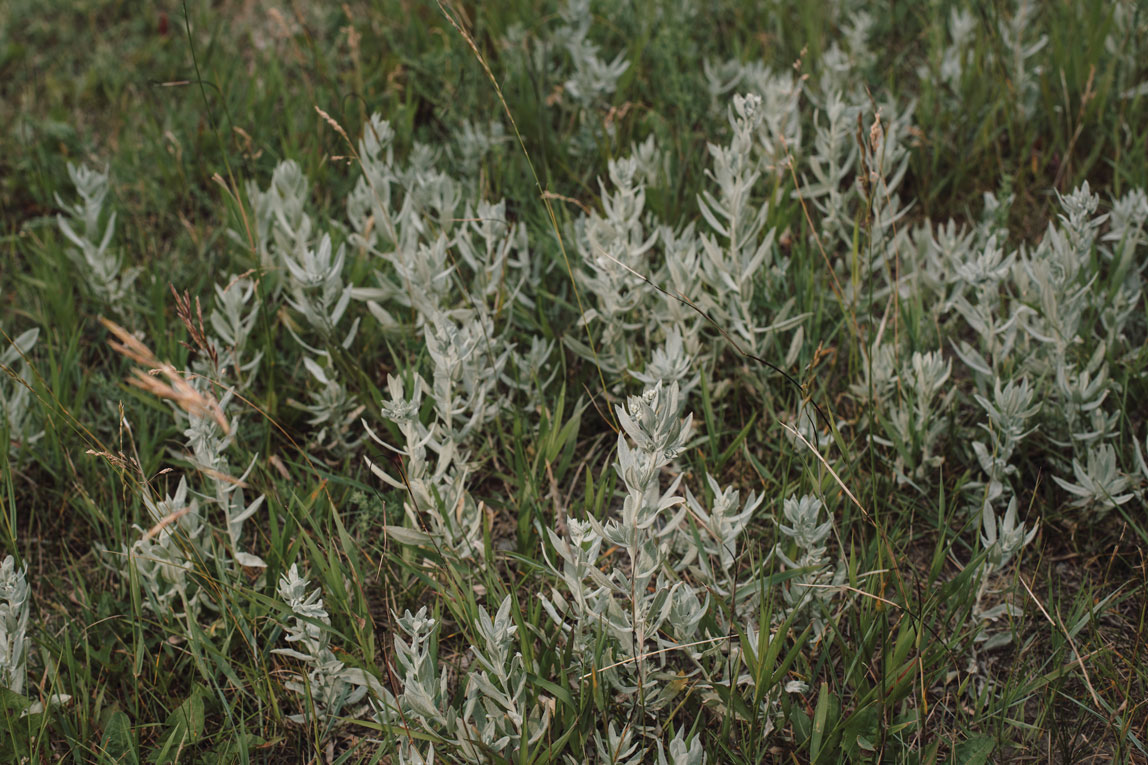
Ninaika’ksimii, or Louisiana sagewort, grows in Singer’s yard.
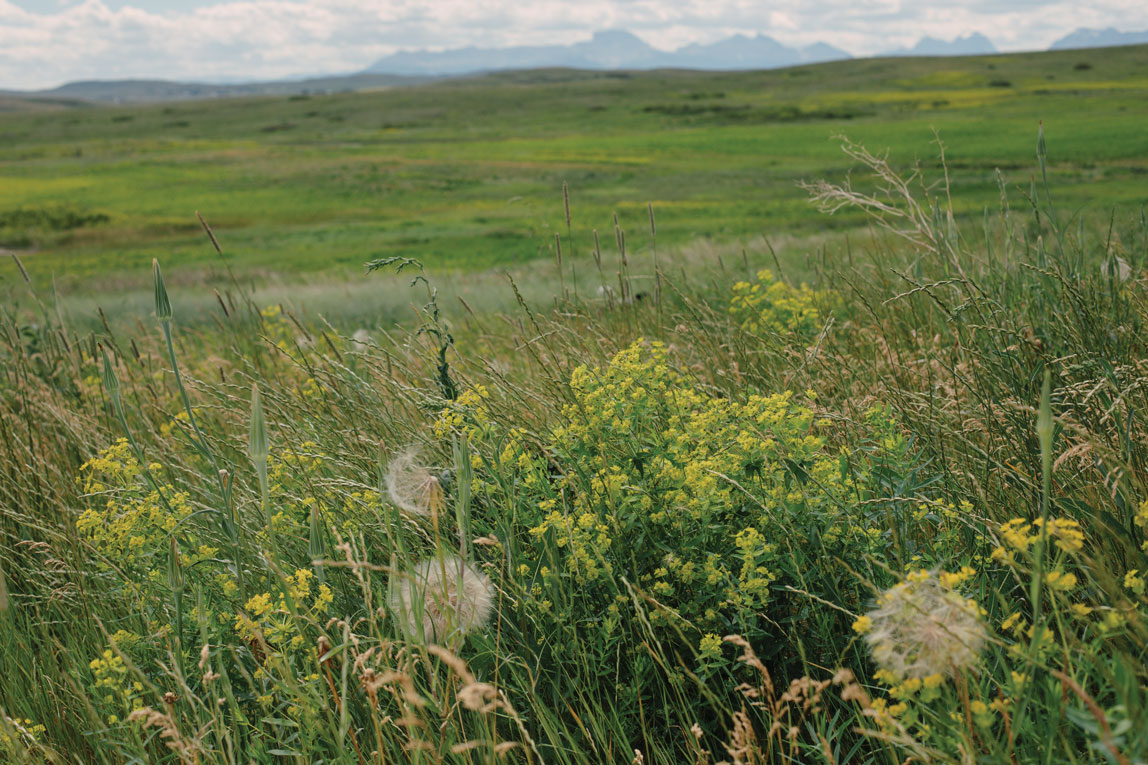
Leafy spurge, an invasive plant, grows in the prairie that Singer is working to restore.

Singer shows a goldenrod plant on the Kainai Blood Tribe reserve. Goldenrod is a native plant, but its Blackfoot name has been lost to colonization.
Api’soomaahka, or William Singer, is converting his cultivated land back to native grasslands. His father began growing crops on their land when Singer was a child. Cultivation introduced non-native species such as Kentucky Bluegrass, brome grasses and invasive spurge, which harm native medicine plants such as sage and sweetgrass. Singer watched these traditional plants disappear. Twelve years ago he began to restore the land to its former state, a project now called Naapi’s Garden. He uses controlled burns, goats and hand weeding to remove the yellow-flowered spurge, but its roots can extend nine metres deep. To protect traditional native plants, Singer grows sage, sweetgrass, mint and turnips in raised garden beds, collecting their seeds and reintroducing them to the land.
Photography by Amber Bracken
With information originally published in The Narwhal, July 31, 2020.
____________________________________________