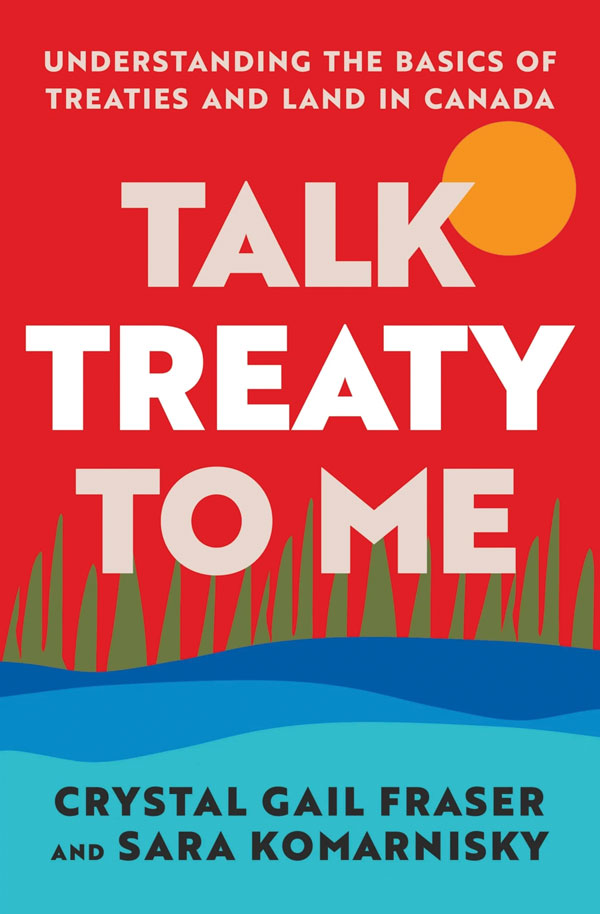
by Crystal Gail Fraser and Sara Komarnisky
HARPERCOLLINS CANADA
2026/$24.99/320 PP.
Following the release of the Truth and Reconciliation Commission’s final report in 2015, Canadian society embarked upon a learning process. We were learning that the stories told about our history and our institutions did not put us in a good place to understand ourselves, Indigenous peoples or our societies, let alone solve the problems we collectively faced. Through reconciliation, Canadian society was beginning to appreciate the why of Indigenous self-determination as well as the how of reconciliation between Indigenous and non-Indigenous society.
Over the past couple of years this project has been under attack—motivated in part by economic threats from without and rejection of this learning process from within. In Alberta reconciliatory backsliding often takes the form of movements for provincial autonomy and/or independence. Premier Danielle Smith and separatist proponents such as Barry Cooper have justified their respective cases for greater provincial jurisdiction and independence by claiming that just as Ottawa oppresses First Nations, Ottawa oppresses Alberta. This rhetorical move hides Alberta’s role in denying Indigenous self-determination—as when AI data centre proposals were allowed to proceed without consultation, in violation of the spirit and intent of treaty as a framework for shared decision-making.
In response some Albertans—including opposition leader Naheed Nenshi—follow the lead of Alberta treaty chiefs by insisting that “We are all Treaty people.”
To understand what this means I recommend Crystal Fraser and Sara Komarnisky’s timely collaboration. Talk Treaty To Me performs a nearly impossible task: it is a high-level historical synthesis of Treaty across the lands now known as Canada, from time immemorial to the present, while attending to specificities and the importance of place. It is an accessible introduction for those new to the concept and practice of Treaty, while providing for the initiated a number of important and thought-provoking interventions and orientations. It registers the continued promise of Treaty for everyone while not losing sight of violence and cultural genocide as well as the uneven accumulation of benefits and privileges for and between settlers and Indigenous peoples that followed in the wake of Treaty negotiations. For readers hoping to slow and perhaps reverse separatist momentum and reconciliatory backsliding by insisting on our status as Treaty peoples, Fraser and Komarnisky helps us understand what that means and why we might embrace—not simply resign ourselves to or adopt for merely instrumental purposes—the promise of treaty.
Corey Snelgrove teaches political science at the U of A.
_______________________________________