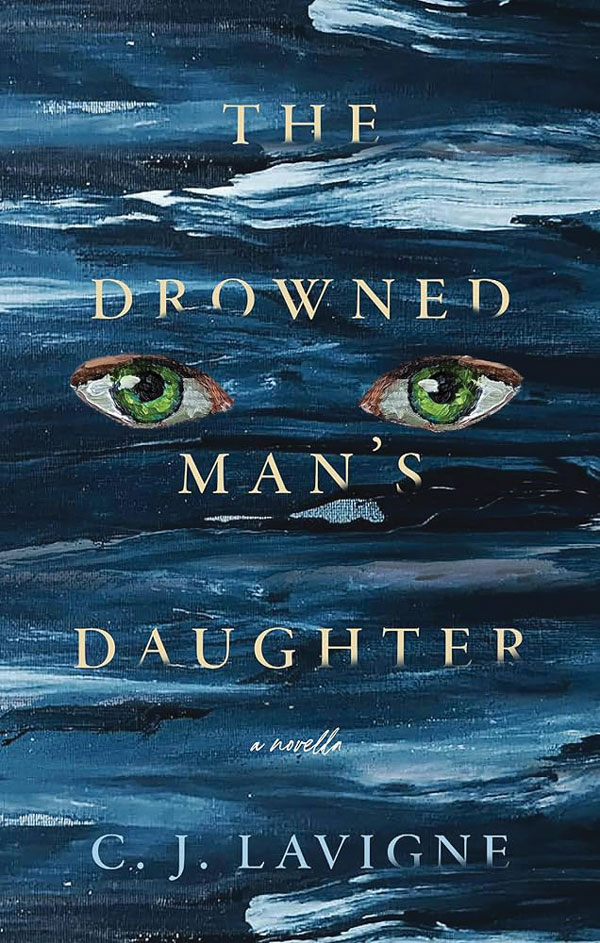
by C.J. Lavigne
NEWEST PRESS
2025/$23.95/176 pp.
The new speculative fiction imprint for NeWest Press, Barbour Books, comes out strongly with this remarkable novella from C.J. Lavigne, known to readers and awards committees for her excellent debut, In Veritas.
The Drowned Man’s Daughter is a fine book: rich, dark, intense, sneaky, secretly literary. On first reading I was simply lost in the strange and complex world of Naia and her cohort of generational slow-apocalypse survivors. As I read, I also wondered: does every generation of writers write the apocalypse that they have not earned but their forebears deserve?
Lavigne’s narrator lives in a future world that desperately needs magic but cannot find it. Instead, magical thinking infects a tiny lost pocket of people who yearn for a way to make sense of their marginal existence. On an island, in an abandoned pre-breakdown ruin that may or may not have been a research station, a handful of survivors are locked into a strange ecosystem where sea people could be real or just a reflection from seals’ eyes in the depths. But there are definitely savage people on land who eat “moss-berries” (the reader extrapolates a world where moss has toxic berries) and give their babies to the island people to raise. Naia, however, was an infant from elsewhere, washed ashore on a disc of ancient plastic not long after a mysterious drowned man was found in the same spot, and her people are desperate for her to be a magical being who can influence the sea and the storms. Her narrative is a masterful tangle, as Naia wants to live up to the mythology even though she knows it’s not real. Still, over time, she is drawn into the mass desire for answers and salvation. Whether or not she finds those isn’t the point. The journey is not about the destination.
On rereading The Drowned Man’s Daughter I was able to get the distance to look at how Lavigne makes, or doesn’t make, this post-breakdown future alive to the reader. During the online launch Lavigne said, “I explained everything, but then it was too long, so I cut every explanation but left the descriptions and actions”—which in itself is a master-class instruction for any speculative writer. The reader must be alert to the subtle interweaving of what Samuel R. Delany called “subjunctivity”: descriptions of a world not ours, but enough like ours to deceive us, or at least lull us into false assumptions that then are shattered by a single phrase or act. For example, my favourite moment, sublime in both art and craft, places a key piece of worldbuilding—on page 108! There, Naia says, of the community elder’s death, “She had been wise and hard and kind. She had once known a man who remembered birds.”
Candas Jane Dorsey is a multi-genre author and editor.
_______________________________________