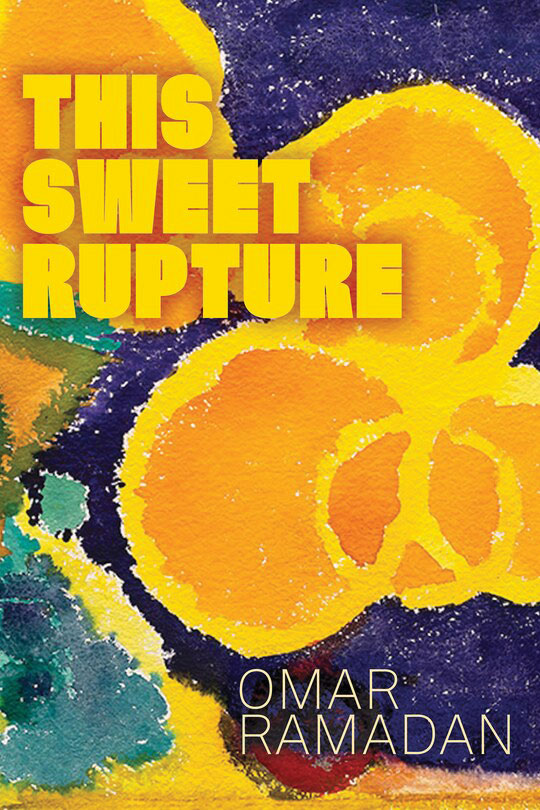
by Omar Ramadan
UNIVERSITY OF ALBERTA PRESS
2025/$19.99/72 pp.
The 2006 Lebanon war. The 2007 Lebanon conflict. The October 17th revolution in 2019. The 2020 Beirut explosion. The liquidity crisis. It’s against this backdrop that Lebanese-Canadian poet Omar Ramadan has lived and composed the poems in his debut collection, This Sweet Rupture, a lyrical and at times terrifying ride-along through Manitoba blizzards, DQ Blizzards, Whatsapp calls, Google Streetview, Istanbul taxis, Beirut checkpoints and the Vancouver airport.
The title refers to rupture, but the thread through the work is of bridging and blending: English with Arabic, father with son, nation with nation, history with modernity. Arabic words and script are used throughout, comprising perhaps no more than 1 per cent of the text, but present and prominent in their unannotated claim to attention. For the reader who speaks no Arabic, the effect is an erasure, and a recognition of lack or failure to know a world. For the Arabic speaker, it’s a different book. In the poem “Sesame Love” Ramadan asks the “question of ‘when did hummus become hummus’…/ What singular moment in time did the cultural lexicon decide/ this word is acceptable not to italicize. Does the OED have/ jurisdiction/ over what is acceptable.…” The couple buying hummus at the grocery store in this poem, well, let’s just say they make a bad choice—for an inauthentic product that has recently been the object of some boycotts—yet, he concludes, “…I don’t lay the blame at their feet, or in their hands, or on their tastebuds.” This is a book that you’ll think about while you read. But you’re not going to be told what to think, or what to do.
The title refers to sweetness, and in the literal sense, food is a recurrent theme across this collection. Lavish, sensory descriptions of home country foods are a trope of English-language diasporic literatures, and Ramadan doesn’t stint on these, but he gives the same loving attention to a Krispy Kreme doughnut, as in “Suckers”: “I thought about the sugar melting on my tongue. I watched the doughnuts/ from behind the glass plate pass through the conveyor, cooked fresh and live./ How the dough would glide into the oil, come out looking inflated. How the/ inflated dough passed under endless sugar glaze.”
Ramadan has finely honed skills as a storyteller, sharply pinpointing the core of a narrative. He’s a multisensory observer, invoking tastes, smells, temperatures and those interoceptive sensations that underlie emotion. Whether he’s jaywalking to Safeway, fishing for sharks with his uncle, or watching his father disassemble a rifle at the dinner table, we feel ourselves viscerally present. The poems skip across geographies, but each is precisely placed and essential to the sweetness of the whole.
Dawn Macdonald is a writer and researcher in Whitehorse.
_______________________________________
Click here to sign up for our free online newsletter.
Read More Books from University of Alberta Press