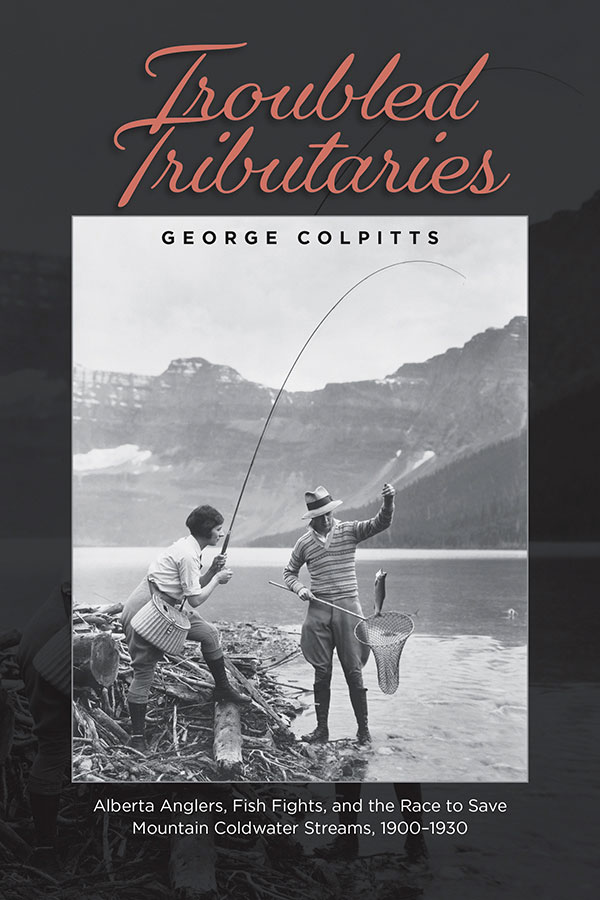
by George Colpitts
UNIVERSITY OF CALGARY PRESS
2026/$34.99/258 PP.
As European settlers pushed in greater numbers into the Canadian west in the early 20th century, they found huge numbers of fish in Alberta’s lakes, streams and rivers—and excellent sport fishing. But as the pressure on those fish populations grew and catches declined, sport fishermen turned to conservation. Their attempts to protect the rivers and streams—and the battle over whose interests to prioritize—is the focus of George Colpitts’s newest book, Troubled Tributaries.
Colpitts is a professor at the University of Calgary who specializes in environmental history. His book tracks “anglers,” sport fishermen using rod and reel, who pulled major hauls from Alberta’s rivers before the First World War but then saw ever more people lining the banks. Colpitts tracks the different paths taken by local groups that sprang up to protect fishing holes or to lobby for the closure of specific streams and areas. In High River, for instance, a “massive, grassroots movement” emerged to protect the upstream “nursery” areas of the Highwood River to “guarantee a supply of fish” downstream near town. In contrast, in the coal mining area around Crowsnest Pass, where “fish was still a major staple in coal miners’ diets, poaching was rampant, and stream dynamiting common,” conservation-minded anglers pursued a more inclusive approach that included co-operation in conservation efforts. They even pushed for the use of hatcheries to help increase fish populations.
The introduction of the automobile brought major tensions between small-town anglers and their big-city counterparts. Calgary outdoors enthusiasts could now reach what were once secluded fishing spots, pulling out the best fish and leaving behind a mess. Protecting the fish from this onslaught was a major concern of local angler groups.
But other forces were at play, which we can better see now in hindsight. Around Crowsnest Pass, notes Colpitts, “the industrialization of the river threatened to wipe out cutthroat, mountain whitefish and especially the bull trout population.”
Largely missing from this narrative of fishing in the early 20th century are the voices of Indigenous people. That likely says less about narrative choices and more about the fact that settlers coming west paid scant attention to the Indigenous people they were quickly outnumbering and displacing.
What Colpitts brings to light is an early conservation debate and the way settlers viewed their new environment. While the narrative is at times dry, it’s still a fascinating look at what was considered important for conservation more than a century ago.
Justin Bell is a journalist in Edmonton.
_______________________________________